
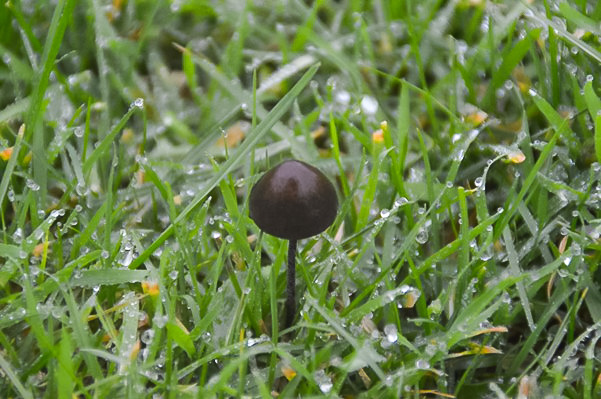
Marvellous Mycelium
There are a few topics you shouldn’t bring up in polite company – politics, religion, and mushrooms. These fungi can inspire delight or disgust, whether they’re spotted in your flowerbed or your dinner. Regardless of whether you prefer to keep mushrooms out of your fridge or your garden, you can’t help but marvel at mycelium networks.
Mycelium networks refer to the root systems of fungi, consisting of branching threads of hyphae. Coming to fame in 1997, Simard’s article on mycelium networks, or the Wood Wide Web brought to light what grows in the dark and the complexity of unseen ecological systems. Mycelium networks link various forms of plant life and facilitate exchange of nutrients. They also play a role in retaining moisture, strengthening, and improving soil structure and quality, and bolstering disease resistance. It goes to show with this mycorrhizal symbiosis between plant life and mycelium networks, that when you see mushroom sprouting in your garden, there is truly more than meets the eye.
While of course, you should be vigilant of the mushrooms that grow in your garden – toxicity to pets and children, soil drainage, and potential damage to wooden structures should always be considered. However, it cannot be forgotten that mycelium networks can be crucial in maintaining balance in your garden’s ecosystem. So, the next time you see mushrooms sprouting in your garden, you needn’t worry – it can be a sign that your soil’s ecosystem is functioning as intended.
Alana Oakes
In our next Compass issue ‘Inspired By’ feature Alana will dig deeper into the Marvellous Mycelium underworld!